Celebrating Christ the King: His Arrival and Reign Week 8

all nations

The Promise Celebrated; Christ the King Has Come

Scripture Focus: Matthew 2:1–12; Philippians 2:5–11; Revelation 11:15


The waiting is over! All 300 prophecies have been fulfilled. The Light that dawned in Bethlehem now shines for the whole world to see.

Christmas is more than a celebration of a birth, it is the coronation of the King of the Universe. The eternal Word who became flesh, (John 1:1) the baby born in humility, is none other than the King of glory. He laid in the manger and rose to the throne. The life, and story of Jesus is the story of God’s love made visible.

And now because heaven and earth rejoice, we can join in declaring:
Christ the King has come!


The Wise Men’s Journey — Seeking the King

“After Jesus was born in Bethlehem in Judea, during the time of King Herod, Magi from the east came to Jerusalem and asked,
‘Where is the one who has been born king of the Jews? We saw His star when it rose and have come to worship Him.’”
Matthew 2:1–2

When the shepherds in Israel were rejoicing at the angel’s message, there were wise men from distant lands that studied the skies and followed a star.
They weren’t Jews, yet God revealed to them that a divine King had been born. They traveled hundreds of miles through deserts, danger, and uncertainty because their hearts were drawn to worship.

When the wisemen arrived in Jerusalem it startled Herod, who ruled with fear and paranoia. He felt threatened by any mention of another king. But the Magi weren’t looking for a new political leader. Instead they were seeking the Messiah, the one King whose reign will never end.

Herod’s palace represented worldly power; the manger represented heavenly purpose. These Magi found what Herod was never able to grasp. The presence of God wrapped in humanity.

“They bowed down and worshiped Him. Then they opened their treasures and presented Him with gifts of gold, frankincense and myrrh.” (Matthew 2:11)

Their gifts were deeply symbolic:

  • Gold for His royalty — the King of kings.
  • Frankincense for His deity — the High Priest of heaven.
  • Myrrh for His sacrifice — the Savior who would die for the world.

Even when He was a baby, Jesus was recognized as the King, God, and Redeemer.

jesus

The Humble King Exalted

Though Jesus came in humility, His destiny was glory.
Paul captures this beautifully in Philippians 2:5–11:

“Christ Jesus, who, being in very nature God, did not consider equality with God something to be used to His own advantage;
rather, He made Himself nothing by taking the very nature of a servant and being found in appearance as a man, He humbled Himself by becoming obedient to death — even death on a cross.
Therefore God exalted Him to the highest place and gave Him the name that is above every name, that at the name of Jesus every knee should bow, in heaven and on earth and under the earth, and every tongue acknowledge that Jesus Christ is Lord, to the glory of God the Father.”

As we study the word more we’ll see the manger points to the cross, and the cross points to the throne. The humility of His birth paved the way for the victory of His resurrection. The King who came to serve will one day return to reign.

Christmas was by no means the beginning of His story it’s been part of the unveiling of God’s eternal plan to bring heaven to earth.


He Reigns Forever

The Book of Revelation reveals what is beyond Bethlehem and opens our eyes to the throne of eternity:

“The kingdom of the world has become the kingdom of our Lord and of His Messiah,
and He will reign for ever and ever.”
Revelation 11:15

The baby who had no place to go slept in a manger and now rules with power and majesty. The same Jesus who was swaddled and laid down in hay will one day reign over heaven and earth.

The humble and helpless infant lived and became the risen Savior and the risen Savior is the returning King.

At Christmas, we have an opportunity to celebrate both His coming then and His return. He came once to redeem; and when He returns He will come again to reign. With every star, every song, every candle lit in the darkness pointing directly to this eternal truth:

The King has come, and He is coming again.

kingdom

A Kingdom for All People

From the beginning, God’s plan was not limited to one race or nation. The visit of the wise men shows that Jesus came to save the whole world, for Jew and Gentile, for shepherd and scholar, not only for the poor but the powerful alike.

Isaiah 60:3 foretold it centuries before:

“Nations will come to your light, and kings to the brightness of your dawn.”

That prophecy becomes reality in the Magi’s journey, the nations bowing before the newborn King.

Today, we continue with their worship. Now every Christmas carol that gets sung in a different language, every believer that is lifting hands in another part of the world, is part of that same story. “The Light that began in Bethlehem now shines across the nations.”


Our Response “Worship the King

The wise men came with gifts. We also have something to bring, our hearts, our obedience, and our praise.

Gold, frankincense, and myrrh represented the best of what they had.
Our worship today does the same. When we give Jesus our time, our love, our lives we honor Him as King.

When we worship know that it is more than a song; it’s a surrender. When we kneel before Christ and say, “You are Lord,” we join the chorus of heaven.


Reflection for the Week

  • What does Jesus’ kingship mean to you personally?
  • How can you “offer” your own form of worship this Christmas; time, service, gratitude, or love?
  • How does remembering that Jesus will return as King shape the way you celebrate His birth?

Personal Application

This week, let your Christmas celebration become a coronation.
Every prayer, every song, every shared moment with loved ones is an opportunity to declare: “Christ is King.”

When you gather around the tree, sitting down with family, or the table, remember the same Jesus who came in humility now reigns in glory, and one day every eye will see Him.

Take a quiet moment this week to pray and reflect:

Dear Heavenly Father, I worship You as my King. You came in love, lived in truth, and reign in glory. Let my heart be Yours. Help me so that May my life will reflect Your kingdom being full of grace, truth, and light. This Christmas, I celebrate not just Your birth, but Your reign forever. In Jesus Name Amen.

Thinking

Final Thought

The story of Christmas doesn’t end with the manger it continues in the hearts of all who believe. The same light that shone in Bethlehem now shines in you. And as you carry that light into a dark world, you fulfill the song of the angels:

“Glory to God in the highest,
and on earth peace, goodwill toward men.”

Christ the King has come and He is with us still.


Getting to Know Him

Do you want eternal life? Do you want to enter heaven through the only guide that can help you navigate your way there? To enter His home, get to know Him better, and make Him your Lord and Savior CLICK HERE…..

The Promise Revealed, Light to the Nations Week 7

old man

The Faith of Simeon and Anna

Scripture Focus: Luke 2:25–38, Isaiah 42:6–7, John 8:12


Jesus’ story didn’t end in the manger. Forty days later, Mary and Joseph brought Him to the temple in Jerusalem to present Him to the Lord, just as the Law of Moses required.


There were two elderly saints, Simeon and Anna, there waiting.
They had spent their entire lives in expectation of the coming Messiah with their eyes set on heaven’s promise. And when they saw Jesus, they knew without a doubt this is the One.


The Long Wait of Faith

“Now there was a man in Jerusalem called Simeon, who was righteous and devout. He was waiting for the consolation of Israel, and the Holy Spirit was on him.”
Luke 2:25

Simeon’s name means “he who hears.” He had been listening for the voice of God his whole life, and what he heard was a promise:

“It had been revealed to him by the Holy Spirit that he would not die before he had seen the Lord’s Messiah.” (v. 26)

We aren’t told how long he waited, maybe years, perhaps decades, but Simeon never gave up hope. Every sunrise, he would look toward the temple wondering, Is today the day? His faith didn’t fade with time; it only grew stronger.

Waiting will often test us. Naturally, we all want quick answers, even instant results. We should use Simeons example because it shows that true faith trusts God’s timing even when the clock seems to be silent. He believed what God said, even before he saw it.

Simeons faith is what makes Christmas so powerful, it’s the moment waiting that turned to fulfillment. God’s promises may take time, but they never fail.


Led by the Spirit, Guided by Hope

“Moved by the Spirit, he went into the temple courts. When the parents brought in the child Jesus to do for Him what the custom of the Law required, Simeon took Him in his arms and praised God.” (Luke 2:27–28)

Can you imagine the scene: Simeon, now an old man, suddenly feels a holy nudge from the Spirit, GO NOW. It was At that exact moment, Mary and Joseph arrived with their infant Son. Like always God’s timing was perfect once again.

Simeon exuberantly approaches, takes the baby into his arms, and worships.
His words, known as the “Nunc Dimittis“, are some of the most beautiful in all Scripture:

“Sovereign Lord, as You have promised, You may now dismiss Your servant in peace. For my eyes have seen Your salvation, which You have prepared in the sight of all nations: a light for revelation to the Gentiles, and the glory of Your people Israel.”
Luke 2:29–32

In that moment, Simeon understood what few yet realized:
Jesus wasn’t just Israel’s Messiah, He was Savior of the world.

The baby, barely forty days old, was the fulfillment of Isaiah’s prophecy:

“I will make You a light for the Gentiles, that My salvation may reach to the ends of the earth.” (Isaiah 49:6)


A Light to the Nations

When Simeon called Jesus “a light for revelation to the Gentiles,” he was declaring something momentous. Israel’s Messiah, Savior, was never meant to bless just one nation alone, He came as the light to shine for all.

Centuries earlier, Isaiah had written:

“I, the Lord, have called You in righteousness; I will take hold of Your hand.
I will keep You and will make You to be a covenant for the people and a light for the Gentiles, to open eyes that are blind, to free captives from prison.” (Isaiah 42:6–7)

At this point, that prophecy was alive and breathing in Simeon’s arms.

This theme of light runs throughout Scripture:

  • In creation, God said, “Let there be light.” (Genesis 1:3)
  • In prophecy, He promised, “The people walking in darkness have seen a great light.” (Isaiah 9:2)
  • And in fulfillment, Jesus declared, “I am the light of the world.” (John 8:12)

With every candle on a Christmas tree, every twinkle in the night sky, they all point us back to this truth, Christ is the Light that never fades.

Women worshiping

Anna’s Joyful Witness

Simeon wasn’t the only one waiting. There was another waiting nearby Anna, a prophetess, whose name means grace.”

“There was also a prophet, Anna… she was very old; she had lived with her husband seven years after her marriage, and then was a widow until she was eighty-four. She never left the temple but worshiped night and day, fasting and praying.” (Luke 2:36–37)

Anna was someone who had known sorrow, she had been a widow for decades, lived for years in solitude, but with it she turned her pain into prayer. While others might have grown bitter, Anna on the other hand only grew more devoted. She made her life a living offering of worship.

When she saw Jesus, she instantly knew.

“Coming up to them at that very moment, she gave thanks to God and spoke about the child to all who were looking forward to the redemption of Jerusalem.” (v. 38)

Just like Simeon, she didn’t keep silent. Instead She spoke up about the child, letting everyone who would listen know that the Redeemer had come.

Anna’s example shows us that waiting is never wasted when it’s filled with worship. Her lesson teaches us that joy is found not in what we possess, but in who we behold.


Revelation and Response

With Simeon and Anna, we can see two pictures of faithful expectation:

  • Simeon waited with hope, led by the Spirit.
  • Anna waited with worship, sustained by prayer.

Both remind us that God reveals Himself to those who are faithful in the waiting.

We need to consider and remember that sometimes, like them, we don’t see God’s promises fulfilled right away. But if we remain patient and steadfast, we too will see His faithfulness. It might not be the way we expect, but it is always in the way we need.

Their story bridges the gap between the Old and New, between prophecy and fulfillment, longing and arrival, darkness and light. Through them, we see that Jesus’ birth wasn’t just the fulfillment of Israel’s hope; it was the dawn of salvation for all humanity.

Man thinking

Reflection for the Week

  • How do you handle seasons of waiting in your spiritual life?
  • What does it mean to you that Jesus is “a light for revelation to the nations”?
  • Are there promises from God you’ve been waiting on — and can you trust His timing like Simeon and Anna did?

Personal Application

This week, take time to “wait in worship.” Take time to spend quiet moments in prayer every day, not asking for anything, but simply thanking God for His faithfulness. (Psalm 119:15)

Light a candle each evening, not as ritual but as a tool to reflect on Jesus, the true Light of the world. As the flame glows, remember and consider that His light still shines in the darkness, through you, and through His Church.

Prayer:

Dear Heavenly Father, thank You for being the Light that never fades. Teach me how to have the patience to wait on You with faith like Simeon and have pure worship like Anna. Let my life reflect Your light to the world, so others may see Your salvation and give You glory. Thank you Lord for everything you have done and do in my life. In Jesus Name Amen

Getting to Know Him

Do you want eternal life? Do you want to enter heaven through the only guide that can help you navigate your way there? To enter His home, get to know Him better, and make Him your Lord and Savior CLICK HERE…..

God’s Promise Realized in Bethlehem: The Promise Fulfilled The Birth of Christ Week 6

jesus in the manger

Scripture Focus: Luke 2:1–20, Isaiah 9:6–7, Galatians 4:4–5


For centuries, prophesied of His coming. For generations they longed for redemption, always waiting in hope that God would keep His word. And all of a sudden, in the stillness of a night, in a small town called Bethlehem the Word became flesh, and the Promise was fulfilled. John 1:1

Jesus did not enter this world with trumpets or thrones, but with the cry of a newborn that heaven’s plan unfolded. The Son of God entered a world wrapped in darkness to bring light that would never go out.


The Humility of Heaven’s Arrival

“In those days Caesar Augustus issued a decree that a census should be taken of the entire Roman world… And everyone went to their own town to register. So Joseph also went up from the town of Nazareth in Galilee to Judea, to Bethlehem the town of David” (Luke 2:1–4).

From a political decree in Rome to a stable in Bethlehem, God was moving history toward His promise. Nothing; not the power of an empire, the discomfort of travel, or the lack of a proper room could stop His plan.

When the moment came, the King of kings was born not in a palace, but in a place for animals. He was laid in a manger, a feeding trough, because there was no room for Him elsewhere.

This scene reveals the paradox of the gospel: the Almighty became small so that we could be lifted up.

  • He entered poverty to bring us the riches of grace.
  • He stepped into weakness to give us strength.
  • He did not arrive in grandeur, but in gentleness, He was approachable, touchable, human.

Isaiah had foretold this hundreds of years earlier:

“For to us a child is born, to us a son is given,
and the government will be on His shoulders.
And He will be called Wonderful Counselor, Mighty God,
Everlasting Father, Prince of Peace.” (Isaiah 9:6)

It says: “To us a child is born, to us a Son is given.”
The child was born in Bethlehem, and the Son, the eternal Son of God, was given from heaven. The birth of Jesus wasn’t just a moment in time; it was the moment eternity entered time.


Heaven Announces the Good News

While the world slept, heaven couldn’t stay silent.

“And there were shepherds living out in the fields nearby, keeping watch over their flocks at night.
An angel of the Lord appeared to them, and the glory of the Lord shone around them, and they were terrified.
But the angel said to them, ‘Do not be afraid. I bring you good news that will cause great joy for all the people.
Today in the town of David a Savior has been born to you; He is the Messiah, the Lord.’” (Luke 2:8–11)

The first announcement of Christ’s birth didn’t come to kings or priests, it was proclaimed to shepherds. These were ordinary men, often looked down upon by society, yet heaven’s light found them first. This is the heart of Christmas: God’s glory revealed to the humble, with His salvation offered to all.

The angel’s message contains the entire gospel in a single sentence:

“A Savior has been born to you.”

The Savior wasn’t just born for humanity, He was born to humanity.
The eternal Word became one of us, stepping into our world to redeem us from within.

angels worshiping

And when the angel finished, the sky erupted with worship:

“Glory to God in the highest heaven,
and on earth peace to those on whom His favor rests.” (Luke 2:14)

Heaven rejoiced, for peace had finally come! It was not political peace, but the reconciliation of God and man. The war of separation caused by sin was ending in a manger.


The Shepherds Respond in Faith

The shepherds didn’t debate or delay.

“When the angels had left them and gone into heaven, the shepherds said to one another,
‘Let’s go to Bethlehem and see this thing that has happened, which the Lord has told us about.’” (Luke 2:15)

Faith moves. The shepherds left their flocks, their comfort, and their night watch, all so they could find the newborn King. And when they found Him, wrapped in cloth and lying in the manger, their hearts overflowed. They couldn’t keep it to themselves, would have you been able to; they “spread the word concerning what had been told them about this child.” (v.17)

True encounter always leads to proclamation. When we meet Jesus, we can’t help but tell others, because His love demands to be shared.


Mary’s Quiet Wonder

Amid the celebration, one verse stands out with gentle beauty:

“But Mary treasured up all these things and pondered them in her heart.” (Luke 2:19)

Mary had seen the supernatural and the simple intertwine; angels and shepherds, prophecy and poverty, heaven and earth meeting in her arms.
Her response was not noise, but wonder.

In the rush of the Christmas season, Mary teaches us to slow down and treasure everything God has done. The Savior’s birth invites us not just to rejoice, but to reflect, to hold in our hearts the miracle that the infinite, our God came near.


The Fullness of Time

Paul captures the meaning of that night perfectly in Galatians 4:4–5:

“But when the set time had fully come, God sent His Son, born of a woman, born under the law, to redeem those under the law, that we might receive adoption to sonship.”

At the exact right moment, not too early, not too late, God fulfilled His promise. Every prophecy, every shadow, every longing heart found its answer in Jesus.

Christmas, then, is not just about a birth; it’s about the beginning of redemption. The manger points to the cross. The swaddling cloths that foreshadowed the burial linens. The gift of life in Bethlehem that would one day give His life at Calvary.

But for this night, heaven rejoices, the Light has come. (Isaiah 60 1:1)


Reflection for the Week

  • What does the humility of Christ’s birth reveal about God’s character?
  • Why do you think God chose shepherds as the first to hear the news?
  • How can you “treasure” the miracle of Christmas in your own heart this week?

Personal Application

This week, let the story of Christ’s birth draw you into deeper worship. Meditate and pray on it taking time to reread Luke 2 slowly. Try to imagine yourself among the shepherds, gazing upon the newborn King. Let awe and gratitude fill your heart as you remember: God kept His promise.

Pray:

“Lord Jesus, thank You for coming for me. You left heaven’s glory to bring me grace. As I celebrate Your birth, let my heart overflow with gratitude and peace. May Your light shine in me, that others might see Your love this Christmas.”


For an awesome start to the day Pray this prayer each morning:

Dear Heavenly Father, help me to hear Your voice and obey without hesitation. Strengthen me to protect the promises You’ve placed in my life,
even when the path is hard or unseen. Like Joseph, may my life speak louder than my words. Light the path you want me to walk, show the road and steps you want me travel. In Jesus Name Amen

Getting to Know Him

Do you want eternal life? Do you want to enter heaven through the only guide that can help you navigate your way there? To enter His home, get to know Him better, and make Him your Lord and Savior CLICK HERE…..

Faithful Obedience: Lessons from Joseph’s Journey Week 5

joseph
joseph

The Promise Protected — Joseph’s Role in God’s Plan

Scripture Focus: Matthew 1:18–25, Matthew 2:13–15


When we think about the Christmas story, our minds often go first to Mary’s faith, the shepherds’ joy, and the wise men’s gifts. However, standing quietly in the background is a man whose obedience helped preserve the promise of salvation, Joseph, the earthly father of Jesus.

He never speaks a word in Scripture, but his actions speak volumes. God entrusted Joseph with protecting the Messiah. It was never through miracles or might, but through faith, integrity, and obedience in the face of misunderstanding.


A Man of Honor in a Moment of Crisis

The Gospel of Matthew begins Joseph’s story with tension:

“This is how the birth of Jesus the Messiah came about: His mother Mary was pledged to be married to Joseph, but before they came together, she was found to be pregnant through the Holy Spirit” (Matthew 1:18).

If we look at it from Joseph’s perspective, the situation looked devastating. The woman he loved and planned to marry was pregnant and it wasn’t his. If Joseph followed the law, he could have exposed her publicly, but Joseph’s heart highlighted his character:

“Because Joseph her husband was faithful to the law, and yet did not want to expose her to public disgrace, he had in mind to divorce her quietly” (v. 19).

Even in confusion and heartbreak, Joseph chose to have compassion. His first instinct was mercy. That decision, before any angel appeared, shows the kind of man God had chosen: one who sought righteousness, and humility without brutality and cruelty.


Hearing God in the Midst of Uncertainty

When Joseph resolved to act quietly, God intervened.

“But after he had considered this, an angel of the Lord appeared to him in a dream and said,
‘Joseph son of David, do not be afraid to take Mary home as your wife, because what is conceived in her is from the Holy Spirit.
She will give birth to a son, and you are to give Him the name Jesus,
because He will save His people from their sins.’”
Matthew 1:20–21

God met Joseph in a dream, not through thunder or lightning, but in the stillness of the night. When life feels uncertain and confusing, often times God speaks in those quiet moments of surrender.

The angel reminded Joseph of who he was, “son of David.” That phrase connected him back to the royal line and reminded him that he was part of something greater. God was continuing to write redemption’s story through Joseph’s obedience.

backpacker

Immediate Obedience — No Hesitation, No Excuses

When Joseph woke up, the Bible says:

“He did what the angel of the Lord had commanded him and took Mary home as his wife” (Matthew 1:24).

No delay. No argument. No need for a second sign.
Joseph simply obeyed.

He trusted God more than his reputation, more than appearances, and more than the opinions of his community. He chose obedience over explanation — and that decision safeguarded the very life of the Son of God.

Through Joseph’s obedience, prophecy was fulfilled. Isaiah 7:14 had foretold,

“The virgin will conceive and give birth to a son, and they will call Him Immanuel which means ‘God with us.’”

Joseph became the earthly protector of the Promise. He helped ensure that the Word made flesh had a home to grow in, a father to raise Him, and a covering of righteousness in a world that would not understand.


Obedience in the Ordinary

Joseph’s life highlights how God’s greatest works often happen through quiet obedience. Joseph didn’t preach great sermons or perform miracles, he used his faith which made room for the miracle of salvation.

He obeyed in small, daily ways working his trade as a carpenter, providing for his family, leading them with gentleness and integrity. He shows us that spiritual strength isn’t loud; it’s steadfast and unrelenting.

When Herod’s jealousy turned to violence and the angel warned Joseph again

“Get up… take the child and His mother and escape to Egypt” (Matthew 2:13)

Joseph didn’t hesitate. In the dark of night, he gathered Mary and Jesus and fled. Every time God spoke, Joseph would respond immediately. His faith wasn’t about understanding why, he just trusted Who was speaking.

fatherhood

A Model of Godly Fatherhood

Even though Joseph wasn’t Jesus’ biological father, God entrusted him with this fatherly responsibility. Joseph was the protector, provider, and spiritual leader of the household.

He modeled integrity, faithfulness, and humility these qualities would help shape the young Jesus’ earthly upbringing. Luke 2:52 says,

“Jesus grew in wisdom and stature, and in favor with God and man.”

As with any parent, dad, We can imagine that Joseph’s steady example contributed to that growth. Throughout His young life, he taught Jesus what honesty looked like in workshop, what faith looked like in daily prayer, and what courage looked like when life was uncertain and overwhelming.

Fathers today can learn much from Joseph’s quiet strength. True leadership doesn’t demand attention; it serves in love. True fatherhood protects what God has entrusted, even when no one else sees.

Fathers, do not provoke your children to anger, but bring them up in the discipline and instruction of the Lord. (Ephesians 6:4)


The Power of Silent Faith

There is no record of Joseph’s words in Scripture, he lead threw only his actions. Yet that silence spoke and emphasized trust.

Faith doesn’t need words; it needs obedience, walking the walk. Sometimes love doesn’t shout; it simply stands firm.

Joseph’s silent faith was loud in heaven. Because of his obedience it made him a partner in God’s redemptive plan.

When we obey in faith even in the unseen, uncelebrated moments we also steward and protect God’s promises in our lives.


Reflection for the Week

  • How do you respond when God’s plan challenges your expectations?
  • In what areas of your life is God calling you to quiet obedience?
  • What can you learn from Joseph’s courage to obey without explanation?

Personal Application

  1. In the week ahead, follow Joseph’s example with his kind of faith silent, steadfast, and surrendered.
  2. Take time to listen for God’s voice in stillness. When He nudges your heart, obey quickly and completely, even if others don’t understand.
  3. Remember: God will often use those who are faithful in the quiet places to protect His greatest promises.

Pray this prayer each morning:

Dear Heavenly Father, help me to hear Your voice and obey without hesitation. Strengthen me to protect the promises You’ve placed in my life,
even when the path is hard or unseen. Like Joseph, may my life speak louder than my words. Light the path you want me to walk, show the road and steps you want me travel. In Jesus Name Amen

Getting to Know Him

Do you want eternal life? Do you want to enter heaven through the only guide that can help you navigate your way there? To enter His home, get to know Him better, and make Him your Lord and Savior CLICK HERE…..

The Power of Yes: Lessons from Mary’s Journey Week 4

Mother mary
Light rays

The Promise Received

Scripture Focus: Luke 1:26–38, Luke 1:46–55


In Nazareth, there was an ordinary village tucked in the hills of Galilee, a young woman that was quietly living her life when heaven suddenly interrupted her plans. When it came there was no royal announcement, no grand stage just a simple home and a heart that was prepared to listen. Her name was Mary, and her response to God’s call would change the course of the world.

When the angel Gabriel appeared, he greeted her with words that must have startled her:

“Greetings, you who are highly favored! The Lord is with you” (Luke 1:28).

Mary was “deeply disturbed,” by this greeting. Being young, maybe even a teenager and engaged to be married. At this point there is now an angel telling her that she would give birth to the Son of God. Nothing in her life had prepared her for such a moment, however everything in her heart had prepared her to say yes.


An Unlikely Choice — Yet Perfectly Chosen

In all rights, Mary was not the likely choice for such an assignment. She was poor, young, and from what was considered an insignificant town. When we read the bible we can see that’s exactly how God works. We can see over and over that He chooses the humble to confound the proud, and the ordinary to reveal His extraordinary power.

Gabriel told her:

“You will conceive and give birth to a son, and you are to call Him Jesus. He will be great and will be called the Son of the Most High” (Luke 1:31–32).

Her question was honest and pure: “How will this be, since I am a virgin?” (v. 34). She wasn’t doubting God’s ability she was asking to gain some understanding. The angel’s reply revealed the divine mystery:

“The Holy Spirit will come upon you, and the power of the Most High will overshadow you; therefore, the Holy One to be born will be called the Son of God” (v. 35).

Mary’s womb become the dwelling place of the eternal Word. Heaven would take on flesh within her. The promise made in Eden, foretold by prophets, and long awaited by generations would now take root in her own body. (Isaiah 7:14)


Faith That Says “Yes”

Then came one of the most powerful responses in all of Scripture:

“I am the Lord’s servant,” Mary answered. “May it be to me according to your word” (Luke 1:38).

When she spoke these words, heaven’s plan became earth’s reality. Mary not knowing how her family would react, how her soon to be husband Joseph would respond, or what her future looked like. But with all of those questions she trusted that God’s word was greater than her fear.

Her yes did not come with a paved highway. To those surrounding her, the pregnancy would look like a scandal, not a blessing. Yet Mary chose faith over reputation, obedience over comfort.

Know that faith is not the absence of fear it’s a decision to trust God’s word above everything else. Mary believed before she understood, and surrendered before she saw. That’s what it means to truly receive the promise of God.


Harp strings

Mary’s Song — The Overflow of Surrender

When Mary visited her relative Elizabeth, who had also become miraculously pregnant with John the Baptist, Elizabeth confirmed what God had spoken:

“Blessed is she who has believed that the Lord would fulfill His promises to her!” (Luke 1:45).

Mary’s response was worship. Her song, was magnificat, and overflowed with joy and awe:

“My soul magnifies the Lord,
and my spirit rejoices in God my Savior,
for He has looked on the humble estate of His servant…
He who is mighty has done great things for me,
and holy is His name.”
Luke 1:46–49

Her heart magnified God, not the role she played, not her fear, but His greatness. When we have true obedience always it will always lead to worship, through surrender it will allow us to see the hand of God more clearly.


Faith That Receives, Faith That Obeys

With Mary’s example it teaches us that genuine faith doesn’t just believe God’s promises it acts on them. She didn’t argue, delay, or demand proof; she simply yielded to the divine plan.

Humans tend to want to see how everything will work before we say yes. However, if we look, Mary shows us that obedience comes first. God will reveal His power on the other side of surrender.

When we say yes to God in everything, in our calling, our relationships, and daily routines He does more than we can imagine. Because of Jesus we have the same Holy Spirit that overshadowed Mary. Now the Holy Spirit dwells in every believer, this gives us the strength to carry Christ into the world. (Acts 1:8)

Paul writes in Galatians 4:19 that he labored “until Christ is formed in you.” When we completely give in to Jesus gaining the best relationship of our life, we are called to carry His presence spiritually. We will let His life grow within us and be revealed through us to those around us, a light that shines in the dark.


The Humility That Welcomes God

Mary’s life is a quiet reminder that humility opens the door for the miraculous. She was never a status seeker, she sought God’s will. In her humility, God found a willing vessel to accomplish His greatest work.

The true Christmas story is filled with human contrasts: a poor girl chosen for glory, a stable instead of a palace, shepherds instead of rulers. Every detail of the birth of Christ reminds us that God delights in using the humble and obedient.

If we yearn to see God’s power in our lives, we need to approach Him with the same heart Mary had:

“Let it be to me according to Your word.” Luke 1:38

This one single sentence contains the full essence of faith, trust, and worship. It’s a sentence of declaration of surrender. It does not just happen once, but daily.

thinking man

Reflection for the Week

  • What does Mary’s response teach you about trusting God when His plans interrupt yours?
  • How can you live out a “yes” to God’s call this season?
  • What fears or uncertainties might you need to surrender to say, “Let it be to me”?

Personal Application

This week, spend time reflecting on Mary’s faith. Write down one area of your life where God may be asking for your obedience. Pray Mary’s words as your own prayer:

“Lord, I am Your servant. Let it be to me according to Your word.”

Try to take one step of obedience, does not matter how small, in faith.
Just like Mary, you may not see the full picture now, but a simple yes Lord can create the room for God to do something eternal in and through you.

Remember: Christmas began with one heart that fully surrendered to God’s promise.

Prayer

Dear Heavenly Father, give me a heart like Mary’s humble, surrendered, and willing. Teach me to say ‘yes’ even when I don’t understand the full picture.
Calm my fears, strengthen my faith, and help me trust that Your plan for my life is good. Form Christ in me as You formed Him in Mary, shaping me into a vessel of obedience and worship. Let my life reflect complete trust in Your Word. In Jesus Name Amen

Getting to Know Him

Do you want eternal life? Do you want to enter heaven through the only guide that can help you navigate your way there? To enter His home, get to know Him better, and make Him your Lord and Savior CLICK HERE…..

A Promise in the Wilderness; John the Baptist: A Call to Repentance (An 8 week Study Week 3)

John the baptist in the wilderness

John the Baptist and the Way of the Lord

Scripture Focus: Luke 1:13–17, Mark 1:1–8, Isaiah 40:3


We can see that over and over again that every great move of God begins with preparation. Before Jesus stepped into His public ministry, before He preached, healed, or called His disciples God had sent a forerunner. John the Baptist was that voice crying in the wilderness, who was the one chosen to prepare the way for the Lord. Isaiah 40:3

The more familiar you become with the bible you will notice there is a theme of preparation that is woven all throughout Scripture. God will rarely move suddenly; everything He does is strategic. He will not just send His presence but He will prepare our hearts to receive it. And just as God prepared the world for Christ’s first coming through John, He still calls us to prepare our hearts to receive Him anew today. Romans 12:2


A Promise in the Wilderness

The story of John’s birth was miraculous all by itself. His parents, Zechariah and Elizabeth, were righteous followers of God. However they were childless and well advanced in years. One day, as Zechariah served in the temple, the angel Gabriel appeared and declared:

“Your wife Elizabeth will bear you a son, and you are to call him John… and he will go on before the Lord, in the spirit and power of Elijah, to make ready a people prepared for the Lord” (Luke 1:13–17).

John was sent on a mission that was made clear even before he was born. He was sent to awaken hearts, call people to repentance, and prepare them to be prepared for the coming Messiah. The message he was given was simple yet powerful “Repent, for the kingdom of heaven has come near” (Matthew 3:2).

In most cases repentance isn’t a word that gets associated with Christmas. However, repentance is an essential when trying to experience the full joy of Christ’s coming. True repentance is not merely feeling sorry for our sin but turning back toward God. Making sure we align our hearts with His will so that we can fully receive His grace. Ephesians 2:8-9


Preparing the Way — A Call to Readiness

Isaiah had prophesied hundreds of years earlier:

“A voice of one calling: ‘In the wilderness prepare the way for the Lord; make straight in the desert a highway for our God’” (Isaiah 40:3).

In the past, when a king planned to visit a city, he would send messengers ahead to clear the roads and make a straight path for his arrival. They would remove rocks, valleys were filled, and obstacles leveled. Spiritually, John’s message represented, a call to clear away the obstacles in our hearts so that the King could come in unhindered. Proverbs 3:6

Before Jesus could bring salvation to the world, hearts had to be ready to receive Him. John’s baptism symbolized cleansing, they were a public confession that people were turning from sin to prepare for something greater. Mark 1:4

You can see it even today, God calls His people to be spiritually ready. We can’t experience the full meaning of Christmas if our hearts are cluttered with pride, busyness, or bitterness. The same God who sent John to prepare the world for Jesus’ first coming is calling His people now to prepare for His presence in their lives, and for His return. Hebrews 9:28


wilderness

A Voice in the Wilderness

John the Baptist’s ministry didn’t take place in a palace or a synagogue but in the wilderness, a barren, uncomfortable place far from the noise of the city. Yet it was there that crowds came, drawn not by spectacle but by conviction.

The wilderness has always been a place of preparation. Moses met God in the wilderness. (Exodus 3:1-7) Israel was refined there for forty years. (Deuteronomy 8:2)  Jesus Himself would be tested there after His baptism. (Matthew 4:1-11)

Sometimes God must lead us into seasons of “wilderness” it might be quiet, uncomfortable, sometimes feeling overwhelming. This helps “chaos” helps to prepare our hearts for something greater. It’s in those moments that our faith is purified, our pride is confronted, allowing our dependence on God to deepen. (Isaiah 43:2)

John’s wilderness message reminds us: God often prepares us privately before He reveals us publicly. He forms the heart before He sends the calling.


Pointing to the One Who Is Greater

John’s greatness was not in his fame but in his humility. When people tried to elevate him, he continually pointed away from himself:

“After me comes one more powerful than I, the straps of whose sandals I am not worthy to stoop down and untie” (Mark 1:7).

John understood his purpose, he was the voice, not the Word; the messenger, not the Messiah. His role was to direct attention to Jesus, not to himself.

This is the essence of spiritual preparation: less of me, more of Him. In John 3:30, he declared,

“He must increase, but I must decrease.”

Those seven words are the heartbeat of every true disciple. As we prepare our hearts this season, we too must decrease. We need to make sure we are letting go of self-sufficiency, pride, and distraction so that Christ can increase within us. I know that this time of year can lend to many different appealing distractions. (1 Corinthians 10:13)


Preparing Your Heart This Christmas

Jesus in the manger

As Christmas approaches, ask yourself: what would it look like to “prepare the way” for Jesus in your own life?

Maybe it means making space for quiet reflection instead of rushing through the season.


Maybe it means forgiving someone you’ve held bitterness toward.


Maybe it means returning to a daily habit of prayer or Scripture.

Whatever it looks like, preparation always begins with humility, a willingness to turn from what hinders you and return to the heart of God.

When you prepare room for Him, He fills it with peace, joy, and power. (Psalm 16:11)


Reflection for the Week

  • What “wilderness” moments in your life has God used to prepare you for His purpose?
  • What areas of your heart need to be made ready for Jesus this Christmas?
  • How can you, like John, point others toward Christ this season?

Personal Application

Take time this week to slow down, pray, read, meditate and reflect. Ask the Holy Spirit to show you anything that’s crowding your heart; any worry, resentment, distraction and invite Him to clear the way for Jesus.
Each morning, pray this simple prayer of preparation:

“Lord, prepare my heart for You. Make straight the path of my soul. Remove what hinders me from hearing Your voice, and let my life point others to You.”

You’ll find that as you do, you’ll discover what John the Baptist understood so well. The greatest joy in life is not being the center of the story, but preparing the way for the King. As you wait, worship because the same God who brought light to Bethlehem will bring light to your path. John 8:12

Prayer

Dear Heavenly Father, from the very beginning You planned a way back for us. Thank You that when sin entered the world, Your mercy rose to meet it.
I praise You for the promise of Jesus—my Redeemer, my rescue, my hope.
Open my eyes this week to recognize the depth of Your love woven through Scripture from Genesis to the manger. Let my heart rest in the truth that You have always been working, even when humanity failed, even when I failed.
Strengthen my trust in Your plan and anchor my hope in Your Son, the One who crushes the enemy and brings life. In Jesus Name Amen

Getting to Know Him

Do you want eternal life? Do you want to enter heaven through the only guide that can help you navigate your way there? To enter His home, get to know Him better, and make Him your Lord and Savior CLICK HERE…..

The Eternal Word; Jesus Before Time Began (An 8 week Study Week 2)

prophet

The Promise — Foretold Through the Prophets

This week will reveal how God set His redemption plan in motion long before Jesus’ birth. We’ll show that Christmas wasn’t an accident, but the fulfillment of divine promise.


Scripture Focus: Isaiah 7:14, Micah 5:2, Isaiah 9:6–7, Genesis 12:3


Ever since the beginning of time, God has been weaving a story of redemption. This is a story that finds its climax with the birth of Jesus Christ. The manger in Bethlehem wasn’t an afterthought; it was a promise that was fulfilled. It had been foretold through the lips of prophets, sustained through generations of waiting hearts, and delivered in the fullness of God’s perfect timing.

The coming of Jesus is the golden thread that ties all of Scripture together. From Genesis to Malachi, all of the prophets pointed forward to a Savior who would mend what sin had shattered. Every single prophecy whispered hope into dark times. They remind God’s people that no matter how bleak the circumstances, God had not forgotten them.


multiple planets

God’s Promise in the Beginning

The first promise of the coming Savior appears as early as Genesis 3:15 — spoken in the aftermath of humanity’s first sin. God declared to the serpent:

“I will put enmity between you and the woman, and between your offspring and hers; He will crush your head, and you will strike His heel.”

When humanity fell into sin, God already promised a Redeemer who would crush the power of evil. That single verse is known as the Protoevangelium: the “first gospel.” It foretells the coming of Jesus, born of a woman, who would conquer sin and death forever.

As the centuries passed, God continued to expand that promise and reassure His followers. To Abraham He said:

“Through your offspring all nations on earth will be blessed” (Genesis 12:3).

That blessing was not a reference to material prosperity, but spiritual redemption! Foretelling of the arrival of the Messiah who would bring salvation to every nation. The promises of God are and will never be forgotten; they simply unfold in His perfect time. “Jesus Christ the same yesterday, and to day, and forever.” Hebrews 13:8


The Prophets Declare the Coming King

As Israel’s history unfolded through slavery, freedom, kings, and exile. God’s prophets spoke with ever increasing clarity about the coming of the Messiah. Their words, God’s Word, became a light to generations who waited in faith.

In Isaiah 7:14, we read:

“The Lord Himself will give you a sign: The virgin will conceive and give birth to a son, and will call Him Immanuel.”

Immanuel meaning “God with us.” Not distant or far away, not abstract or theoretical, but present and near. God’s promise was not just deliverance from oppression but His very presence among His people.

Then, in Micah 5:2, written 700 years before Jesus’ birth, the prophet revealed the exact birthplace of the Messiah:

“But you, Bethlehem Ephrathah, though you are small among the clans of Judah, out of you will come for Me one who will be ruler over Israel, whose origins are from of old, from ancient times.”

Think of that there were seven centuries before the first Christmas morning. 700 years before Christ was born God named the small village where His Son would enter the world. Even the humble setting of the manger was part of His eternal plan.

Isaiah painted an even grander picture in Isaiah 9:6–7:

“For to us a child is born, to us a son is given, and the government will be on His shoulders. And He will be called Wonderful Counselor, Mighty God, Everlasting Father, Prince of Peace.”

These names describe more than a child. They describe the attributes of God Himself stepping into human history. The promised Messiah would not just bring peace; He is Peace.


every generation

The Faithfulness of God in Every Generation

Between the last Old Testament prophet and the birth of Christ, 400 silent years passed. There were no new prophecies, no angelic voices, no visions. However God was still working behind the scenes. His silence didn’t mean absence; it meant preparation.

While Israel waited, there were empires that rose and fell. The Greek and Roman worlds brought common languages and roads that would one day carry the gospel far beyond Jerusalem. God was setting the stage for the arrival of His Son.

When we feel like God is silent, we always have to remember this truth: He never breaks His promises. What seems like delays are usually divine timing. Just as God fulfilled His Word perfectly in Bethlehem, He will fulfill every promise He has spoken to you.

Paul writes in 2 Corinthians 1:20,

“For no matter how many promises God has made, they are ‘Yes’ in Christ.”

Every prophecy, every covenant, every hope finds its “Yes” in Jesus. Christmas is the ultimate evidence of God’s faithfulness, a living testimony that what He says, He will do.


The Promise Still Speaks Today

The prophets didn’t just predict the coming of Christ; their words continue to speak into us guiding us through our “waiting seasons”. We all have areas of life where we are longing for God’s promises to come to pass. We have needs like healing, direction, reconciliation, and breakthroughs physical and spiritual.

The story of Christmas teaches us and is proof that God’s promises are never empty. The same God who orchestrated centuries of prophecy to bring forth the Savior is still faithful to every word He has ever spoken over your life.

Perhaps you are in a “Micah moment” feeling small and unnoticed, wondering if God sees you. Remember Bethlehem: being small, humble, but chosen.

Perhaps you feel like you are in the silence between the Old and New Testaments waiting for a word, a sign, a move. Think and focus on Psalm 46:10 “Be still, and know that I am God: I will be exalted among the heathen, I will be exalted in the earth”. Remember: God is preparing something greater than you can see.


Reflection for the Week

  • How does seeing Jesus in the Old Testament strengthen your faith?
  • What promise from God are you waiting to see fulfilled?
  • How can you use this Advent season to renew your trust in His timing?

Personal Application

Take time this week to write down one promise from God’s Word that you are believing for. Meditate on Isaiah 9:6 let each title of Jesus remind you of His nature and His power to fulfill what He has spoken.
When you feel discouraged, speak these words aloud:

“God, You are faithful. You fulfilled Your promise in Jesus, and You will fulfill Your promises in me.”

As you wait, worship because the same God who brought light to Bethlehem will bring light to your path. John 8:12

Prayer

Dear Heavenly Father, thank you for everything You have done. Thank you for my life, every breath I take, the health that I have, the list is endless. Thank you for going through the pain and anguish that You did not have to do. But You did and made so even though I am imperfect and do not always get things right You have held out Your hand and said come here it’ll be alright. Thank you lord. In Jesus Name Amen

Getting to Know Him

Do you want eternal life? Do you want to enter heaven through the only guide that can help you navigate your way there? To enter His home, get to know Him better, and make Him your Lord and Savior CLICK HERE…..

The Promise of Redemption in Scripture

redemption

The Promise of a Savior — God’s Plan from the Beginning

Scripture: Genesis 3:15


From the moment sin entered the world, God promised redemption. In Genesis 3:15, He declared that the offspring of the woman would crush the serpent’s head a prophecy pointing directly to Jesus.

This is the first glimpse of the coming Christmas in Scripture the promise that a Savior would come to defeat evil and restore creation. God didn’t abandon humanity after the fall; on the other hand He began a rescue mission that would unfold through generations.

Every story in Scripture, from Noah to Abraham to David, leads toward this promise fulfilled in Christ.


Reflection:
Even when we fail, God’s plan of grace never stops.


Prayer:
Dear Heavenly Father, thank You that Your promise of redemption was written long before I was born. Help me trust and see that You are always working for my good. In Jesus Name Amen

Getting to Know Him

Do you want eternal life? Do you want to enter heaven through the only guide that can help you navigate your way there? To enter His home, get to know Him better, and make Him your Lord and Savior CLICK HERE…..

The Eternal Word; Jesus Before Time Began (An 8 week Study)

the universe

The Eternal Word

Scripture Focus: John 1:1–5, Colossians 1:15–17, Genesis 1:26


Before there was time, before anything had been created, before galaxies spun into motion, before the first dawn broke across a formless earth Jesus already was.

The full story of Jesus doesn’t begin in Bethlehem; it begins in eternity. The manger has never been His origin, but His arrival. The baby that was lying in a feed trough was the eternal Word made flesh. God Himself stepped into His own creation to rescue and redeem it.

When John opened his Gospel, he didn’t start with angels, Mother Mary, or shepherds, but gave a definition of eternity:

“In the beginning was the Word, and the Word was with God, and the Word was God” (John 1:1).

John intentionally echoes Genesis 1:1 “In the beginning God created the heavens and the earth.” Before creation, the Word already was. This phrase tells us something profound: Jesus was not created; He is the Creator. He is never part of time; time is part of Him.

Paul affirms this in Colossians 1:16–17:

“For by Him all things were created: things in heaven and on earth, visible and invisible… all things were created by Him and for Him. He is before all things, and in Him all things hold together.”

Every molecule, mountain, heartbeat, river, animal, and human all find their existence in Him. That means that the same hands that were later stretched out on a wooden cross first stretched out and created the stars. The One who cried as a newborn also spoke the universe into being.

holy bible

The Word — God’s Expression of Himself

The Greek word Logos when translated is “Word” it means more than just speech it means the full expression of thought, reason, and purpose. Jesus is the perfect expression of who God is.
Hebrews 1:3 declares,

“The Son is the radiance of God’s glory and the exact representation of His being.”

If you want to know what God is like, take a look at Jesus. His compassion, His justice, His mercy, His truth His actions and who He is all reveal the heart of the Father. He is not a messenger, or a prophet telling us about God; He is God revealed.

This help us change how we read the Christmas story. It was never just about a child born in humble circumstances, it’s always been about the Eternal entering the temporary, the Infinite becoming an infant.

When we read, “The Word became flesh and made His dwelling among us” (John 1:14), we’re reading about the greatest act of humility and love there has ever been in all of history. God our eternal Creator took on skin, weakness, and mortality, just to bring us life.

Jesus, the Life and Light of the World

John continues,

“In Him was life, and that life was the light of all mankind” (John 1:4).

Jesus doesn’t just bring life, He is life. Every living soul owes its breath to Him. However when He entered the world that He created, many didn’t recognize Him. Even today, people search for meaning, purpose, and light apart from Him, yet He remains the one and only true source.

Darkness cannot overcome light. That statement is true physically and spiritually. When the light of Christ shines into a heart, sin, shame, and despair have to flee. Darkness doesn’t stand a chance against His radiance.

As we begin this eight-week journey toward Christmas, this truth must be our foundation: Jesus has always been and always will be. Christmas is not merely a commemoration of His beginning, it’s a celebration of His coming.

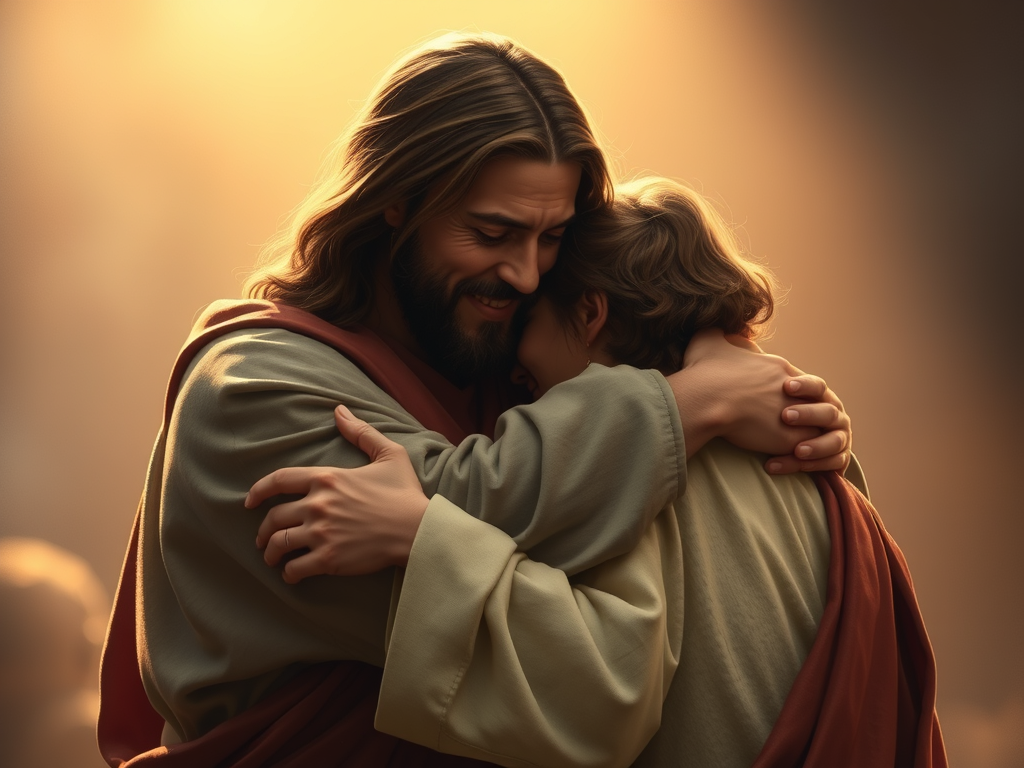
jesus hug

The Eternal Became Personal

It’s breathtaking to think that the God who existed before time now desires to dwell in the hearts of those He created. The same Word who was “with God” from the beginning now says, “Behold, I stand at the door and knock” (Revelation 3:20).
He who formed the universe with a word now waits for our invitation to enter.

This is the miracle of the incarnation not that God simply appeared as a man, but that He came to restore creation to Himself. As Paul writes in 2 Corinthians 5:19,

“God was in Christ reconciling the world to Himself.”

Every Christmas light we see, every carol we sing, every nativity scene we admire should remind us of this staggering truth: the Eternal Word became human so we could know the heart of God.

Reflection for the Week

  • What does it mean to you that Jesus existed before all creation?
  • How does His eternal nature shape your view of Christmas?
  • In what ways can you honor Jesus as both Creator and Savior this week?

Personal Application

Take time this week to worship Jesus as the Eternal Word. Before rushing into the Christmas season, take a minute and remember who He truly is; not just the baby in the manger, but the Alpha and Omega, the One through whom all things were made. Begin each morning this week by declaring:

“Jesus, You are Lord over all — my life, my time, my future. You were before all things, and in You, all things hold together.”

Let this truth settle in your heart: the One who holds the universe together also holds you.

Prayer

Dear Heavenly Father, thank you for everything You have done. Thank you for my life, every breath I take, the health that I have, the list is endless. Thank you for going through the pain and anguish that You did not have to do. But You did and made so even though I am imperfect and do not always get things right You have held out Your hand and said come here it’ll be alright. Thank you lord. In Jesus Name Amen

Getting to Know Him

Do you want eternal life? Do you want to enter heaven through the only guide that can help you navigate your way there? To enter His home, get to know Him better, and make Him your Lord and Savior CLICK HERE…..

Halloween’s Dark Roots: A Christian Perspective

trick or treaters
Trick or treat

Tempted in Every Way

Why Christians Should Not Celebrate Halloween

Every year, as October 31st approaches, millions of people will decorate their homes with jack-o’-lanterns, ghosts, and skeletons, preparing for a night of costumes, candy, and frightful fun. For a lot of people, Halloween is seen as harmless entertainment and a cultural tradition. However, if you are a Christian seeking to honor God in all things, it’s worth asking yourself—should a follower of Christ take part in Halloween?

The Bible advises believers to live as “children of light” and not to participate in the “works of darkness” (Ephesians 5:11). If we look into and examine the origins, symbols, and spiritual implications of Halloween, you’ll see, and it is made clear that this holiday is deeply rooted in themes that oppose and are opposite of God’s Word.


1. The Pagan and Occult Roots of Halloween

Halloween’s origins trace back to the ancient Celtic festival of Samhain, a pagan holiday marking the end of the harvest season and the beginning of winter. The Celts believed that on this night, the boundary between the living and the dead was blurred, and spirits could roam the earth. People lit bonfires and wore costumes to ward off wandering souls.

Though the name “Halloween” (from All Hallows’ Eve) came later through the Christianized calendar, much of this festival’s imagery the ghosts, witches, skulls, and the glorification of death still remains firmly tied to paganism and the occult.

God clearly warns His people against involvement in practices that invoke spirits, magic, or the dead:

“When you come into the land which the LORD your God gives you, you shall not learn to follow the abominations of those nations. There shall not be found among you anyone… who practices witchcraft… or calls up the dead.”
Deuteronomy 18:9–12 (NKJV)

Participating in or trivializing the themes of witchcraft, death, and the supernatural darkness celebrated in Halloween directly contradicts God’s Word.


2. The Bible’s Call to Separate from Darkness

Halloween thrives on the imagery and activities that glorify fear, death, and darkness all of these things the Bible identifies as being opposed to the light of Christ. Scripture commands believers to live differently from the world:

“Do not be conformed to this world, but be transformed by the renewal of your mind.”
Romans 12:2 (ESV)

The Apostle Paul also wrote:

“And have no fellowship with the unfruitful works of darkness, but rather expose them.”
Ephesians 5:11 (NKJV)

Dressing up as demons, ghosts, or horror characters, even if it just “for fun”, blurs the line between the sacred and the profane. Doing this sends a confusing message to the world about where a Christian’s allegiance truly lies.

Light and darkness cannot coexist (2 Corinthians 6:14). As a Christian we are called not to mix with the darkness but to shine brightly against it.

Fear

3. Halloween Glorifies Fear and Death

Overwhelmingly, Fear and death dominate Halloween’s imagery. The haunted houses, graveyards, and horror films all center on the idea of celebrating what Christ came to overcome. Yet Scripture reminds us that God “has not given us a spirit of fear, but of power and of love and of a sound mind” (2 Timothy 1:7).

To the believer, death has been defeated through Jesus Christ:

“The last enemy to be destroyed is death.”
1 Corinthians 15:26 (ESV)

As a Christians when we participate in celebrations that glorify death, we risk minimizing the victory Christ achieved on the cross. Halloween normalizes fear and darkness; the Gospel proclaims light, hope, and eternal life.

Instead of celebrating the grave, Christians celebrate the resurrection.


4. Our Testimony Matters

Even if a believer claims to celebrate Halloween “just for fun,” others, especially unbelievers, tend to interpret that differently. Like in every other aspect of our lives our actions often speak louder than our words. The Apostle Paul reminded the Corinthians that while some actions may seem permissible, not all are beneficial or edifying (1 Corinthians 10:23).

We are called to be ambassadors for Christ (2 Corinthians 5:20), representing Him in all we do. Participating in a holiday rooted in darkness and deception undermines that witness.

Jesus Himself said:

“Let your light so shine before men, that they may see your good works and glorify your Father in heaven.”
Matthew 5:16 (NKJV)

When we abstain from worldly celebrations that glorify sin, we are not being judgmental we are in fact choosing holiness. Our refusal to compromise becomes a powerful testimony to the transformative grace of Christ.


5. Replacing Halloween with Holiness

Instead of engaging with the culture’s celebration of darkness, Christians can redeem the day by focusing on light, love, and outreach. Many churches host “Harvest Festivals” or “Light Nights,” emphasizing gratitude, community, and sharing the Gospel.

This reflects the biblical principle found in Romans 12:21:

“Do not be overcome by evil, but overcome evil with good.”

Parents can use Halloween to teach their children about the armor of God (Ephesians 6:10–18), the reality of the need for spiritual warfare, and the importance of discernment. October can be a powerful opportunity for discipleship, reminding believers that Satan often disguises himself “as an angel of light” (2 Corinthians 11:14).

By replacing fear with faith and darkness with devotion, Christians can shine a powerful light during one of the darkest times of the year.


6. Guarding Our Hearts and Minds

The Bible over and over again highlights how believers need to guard their hearts, for everything we do flows from it (Proverbs 4:23). So the movies we watch, the decorations we display, and the activities we engage in influence our spiritual condition more than we realize.

Halloween often normalizes and celebrates sin and desensitizes people to evil. The horror entertainment syndicate glorifies violence, sorcery, and the demonic realm. Remember all of this garbage Scripture commands us to resist.

“Abstain from every form of evil.”
1 Thessalonians 5:22 (NKJV)

Celebrating Halloween, even passively, can open subtle doors to fear, confusion, and even a fascination with darkness. Instead, believers are called to meditate on things that are “true, noble, right, pure, lovely, admirable” (Philippians 4:8).

living free

7. Living as Children of the Light

Ultimately, the Christian life is a call to holiness, we are to be set apart for God’s glory. Halloween promotes the satin, the very opposite. It celebrates spiritual confusion and darkness, while the Gospel calls us into light and truth.

“For you were once darkness, but now you are light in the Lord. Walk as children of light.”
Ephesians 5:8 (NKJV)

Choosing not to celebrate Halloween is not about excessive legalism, it’s about loyalty. It’s about loving God more than culture, it is about walking in the light rather than flirting with the darkness.

When Christians take a stand against Halloween, they declare that their joy and identity come from Jesus, not from some worldly tradition. We proclaim it is all about Him! 👆


Final Reflection

Halloween may appear harmless, but its underlying themes and symbols contradict the Christian faith we profess. While the world overwhelmingly celebrates ghosts, zombies, murders and goblins, Christians are called to proclaim grace, love, truth and light.

We can love our neighbors without compromising our convictions. We can share the Gospel without dressing it in darkness. We do not have to wrap the good news in a false package that contradicts who He is. And we can honor God by choosing light over shadow.

As Joshua declared long ago:

“Choose this day whom you will serve… But as for me and my house, we will serve the LORD.”
Joshua 24:15 (NKJV)

This October, may we as believers boldly walk in the light of Christ always rejecting the works of darkness and reflecting His glory to a world that desperately needs to see it.

Prayer:
Dear Heavenly Father, when temptation feels too overwhelming, remind me of Jesus’ victory. Help me lean on Your Word, just like He did. Lord help those around me to see what this “holiday” represents. Please help them to see You for the good You are and the light that You can bring into their lives. In Jesus Name Amen.

Getting to Know Him

Do you want eternal life? Do you want to enter heaven through the only guide that can help you navigate your way there? To enter His home, get to know Him better, and make Him your Lord and Savior CLICK HERE…..

Understanding Jesus’ Victory Over Temptation

Jesus in the wilderness

Tempted in Every Way

Scripture: Matthew 4:1–11; Hebrews 2:18

Reading (200–300 words):
We can see in the bible that Jesus was “tempted in every way, just as we are.” The wilderness temptation in Matthew 4 shows that Jesus was tested in body (bread for hunger), spirit (trusting God), and purpose (worshiping Satan for power). Yet He stood firm.

Understanding that Temptation is not sin; the sin comes when we give into the temptation. When we look at Jesus’ example we can be assured that He knows the weight of temptation. When you feel the pull of sin, know that He has walked the same road, and He provides strength to help you endure.

Prayer:
Dear Heavenly Father, when temptation feels too overwhelming, remind me of Jesus’ victory. Help me lean on Your Word, just like He did. In Jesus Name Amen.

Question:
How can Jesus’ example in the wilderness help you resist temptation today?

Key Takeaway:
Always remember Jesus knows the weight of temptation and gives us strength to walk through it.

Getting to Know Him

Do you want eternal life? Do you want to enter heaven through the only guide that can help you navigate your way there? To enter His home, get to know Him better, and make Him your Lord and Savior CLICK HERE…..

Understanding Hebrews 4:15’s Empathetic High Priest

weighs and means

“For we do not have a high priest who is unable to empathize with our weaknesses, but we have one who has been tempted in every way, just as we are—yet he did not sin.”
— Hebrews 4:15 (NIV)


Introduction

In a world where have some vulnerability feels like a liability, Hebrews 4:15 stands out as a beacon of comfort and hope. This verse is a reminder that Jesus, our High Priest, is not distant, aloof, or detached from the human condition. On the other hand, He is deeply familiar with our struggles, temptations, and weaknesses. Unlike our earthly leaders who will try to sympathize without truly understanding, Jesus empathizes with us not from theory, but from lived experience.

This passage has become one of the most reassuring truths in the New Testament: Jesus knows what it feels like to be human. And because He knows, He cares.


The Role of the High Priest

To grasp the weight of this verse, it will help you to understand the role of the High Priest in the Old Testament. The High Priest served as the mediator between God and His people. Once a year, on the Day of Atonement, he would enter the Holy of Holies in the temple to make a sacrifice for the sins of Israel. Hebrews 5:1

But there was a problem: the High Priest himself was imperfect. The priest, just like us, was a sinner in need of atonement. His sacrifices had to be repeated year after year. The abilities he had to represent the people before God was real but limited.`

Enter Jesus. Hebrews describes Him as the ultimate and eternal High Priest, Jesus who is perfect, sinless, and forever interceding on our behalf. But unlike the priests of old, His representation will never be weakened by distance from human experience. He lived among us. He walked dusty roads, grew tired, experienced hunger, wept over loss, and faced temptation head-on. He knows us from the inside out. Luke 12:7


“Tempted in Every Way”

One of the statements to focus on in Hebrews 4:15 is that Jesus was “tempted in every way, just as we are.”

This statement can be hard to wrap our minds around. Jesus, the Son of God, was tempted? 🤔 seems sus but Yes. In the Gospels, we see Him tempted directly by Satan in the wilderness (Matthew 4:1–11). It was not just this interaction, He also faced the ordinary, daily temptations that you and I know so well:

  • The temptation to doubt God’s plan in moments of suffering.
  • The temptation to use power selfishly instead of for others.
  • The temptation to avoid the cross, which we hear in His prayer at Gethsemane: “If it is possible, let this cup pass from me” (Matthew 26:39).
  • The temptation of anger, discouragement, and fear, emotions He expressed without sinning. (Mark 3:1-5)

This doesn’t mean He experienced every specific situation we face. He wasn’t tempted by a social media addiction or by cutting corners on His taxes. However He did experience the root struggles behind every temptation: pride, fear, lust, greed, despair, self-preservation. He knows what it feels like to carry the full weight of human weakness.


“Yet Without Sin”

Here lies the great distinction. While Jesus shared in our temptations, He did not give in to them. He remained pure, holy, and without sin.

This matters for two reasons:

  1. He qualifies as the perfect sacrifice. Because He never sinned, He could die in our place, taking on the punishment we deserved. Hebrews 4:15, 2 Corinthians 5:21 
  2. He shows us victory is possible. His sinless life demonstrates that temptation does not equal defeat. Temptation itself is not sin; yielding to it is. Jesus’ victory gives us hope that, through Him, we too can stand firm.

Empathy, Not Just Sympathy

The verse also emphasizes that Jesus can “empathize with our weaknesses.” This is a deeper reality than mere sympathy. Sympathy says, “I feel sorry for you.” Empathy says, “I’ve been where you are. I understand.”

  • When you’re exhausted, Jesus remembers His weariness by the well in Samaria.
  • When you’re misunderstood, He remembers His own rejection in Nazareth.
  • When you’re grieving, He recalls His tears at Lazarus’ tomb.
  • When you’re afraid of what lies ahead, He remembers the agony of Gethsemane.

Because He lived it, He can sit with us in the rawness of our humanity without judgment or distance.


The Comfort of a Present Savior

This truth has profound implications for how we live our faith:

  1. We can approach God with confidence.
    In the next verse (Hebrews 4:16) encourages us to “approach God’s throne of grace with confidence.” Why? Because the One seated there understands us. We don’t come before a cold judge but before a compassionate Savior.
  2. We are not alone in our struggles.
    Temptation can feel isolating. But Hebrews 4:15 reminds us that we’re not fighting unseen battles; Jesus has walked the same paths. He is not surprised by our struggles.
  3. We have a model for endurance.
    Jesus shows us how to face temptation with Scripture, prayer, and reliance on the Spirit. He doesn’t just empathize—He equips.
  4. We find hope in weakness.
    Our weaknesses don’t disqualify us from God’s love; they draw us closer to the One who understands them.

Living in Light of Hebrews 4:15

So what does this mean for us practically?

  • Bring your struggles honestly to God. You don’t need to dress up your prayers. Jesus already knows what weakness feels like. Pray raw, real prayers.
  • Lean into His victory. When temptation feels overwhelming, remember that Jesus already conquered it. In Him, we have the strength to resist.
  • Offer empathy to others. If Jesus meets us in our weakness, shouldn’t we extend the same grace to others? Our ability to empathize grows when we let His compassion flow through us.
  • Rest in His presence. Sometimes the greatest comfort isn’t a solution but the assurance that we’re not alone. Jesus’ empathy offers that rest.

Conclusion

Hebrews 4:15 is more than a theological statement—it is a lifeline. It reminds us that we are deeply known, deeply understood, and deeply loved by Jesus Christ, our High Priest.

When life feels overwhelming, when temptation presses hard, or when weakness seems to define us, we can look to the One who has been there. He didn’t just come to rescue us from a distance; He came to walk among us, to feel what we feel, to carry what we carry, and to show us a way through.

Because of this, we can stand before God not in shame but in confidence, knowing that our High Priest is both perfect in holiness and perfect in empathy.

So take heart today: Jesus knows. Jesus cares. And Jesus intercedes for you.

Prayer

Dear Heavenly Father, thank you for being who you are, coming down here and experinacing what it means to be a human so You are able to understand us. Thank you for walking beside me when no one else will You are always there. In Jesus Name Amen


Getting to Know Him

Do you want eternal life? Do you want to enter heaven through the only guide that can help you navigate your way there? To enter His home, get to know Him better, and make Him your Lord and Savior CLICK HERE…..

Proclaiming the Good News: Our Urgent Mission Mark 16:15–16

holding a flower

The Great Commission: Our Call to Go and Tell

“And he said to them, ‘Go into all the world and proclaim the gospel to the whole creation. Whoever believes and is baptized will be saved, but whoever does not believe will be condemned.’” – Mark 16:15–16


Introduction: The Final Charge of Jesus

When someone speaks their final words, we tend to listen with special care. Final instructions carry weight, urgency, and a sense of legacy. Mark 16:15–16 tells us Jesus’ great commission to His disciples after He was resurrected. His words were not given for the first-century church but for every believer today. (Romans 1:16) This commission defines our mission, shape our priorities, and it remind us why the gospel matters more than anything else.

These verses contain both an invitation and a responsibility: to believe and trust the good news of Christ and to declare the good news to the world. (2 Timothy 4:2) Let’s break down this charge, understand its implications, and consider how it applies to our lives today.


“Go Into All the World” – The Call to Movement

The first word Jesus uses is simple yet powerful: “Go.”

The gospel was never meant to be confined within church walls, small groups, or private devotion. It is a message to be shared and carried outward. Notice that Jesus never said “stay” or “wait until the people and world comes to you.” Instead, He commands intentional movement—outward, forward, beyond comfort zones. (1 Corinthians 1:17

“All the world” means there are no boundaries to the reach of the gospel, from as far as the east is to the west. It is not reserved for a single nation, one single people group, or just one culture. We have been told to share it from the busy streets of our modern cities to the remote villages far from technology, the good news of Jesus has been given to everyone.

We should take this as a challenge. In many cases, Christians will tend to grow comfortable casually waiting for opportunities to come instead of seeking them out. But Jesus is clear: we are called to go. The best way to find this opportunities could include things like traveling overseas, reaching into your local communities, maybe just stepping across the street to meet a neighbor, the command is the same. (1 Timothy 4:15-16)


“Proclaim the Gospel to the Whole Creation” – The Power of the Message

Next, Jesus commands His followers to proclaim the gospel.

The gospel which literally means, the “good news” is the heart of Christianity. The bible contains the message that Jesus lived, died, and rose again so that sinners could coexist in harmony with God. It is not advice, a philosophy, or a self-help guide. It is an announcement of what God has already accomplished through Christ. I literally call it our owners manual. With what is in the pages of the bible, if we depend on Him, it will additionally reveal how we are expected and even how to live.

Proclaiming the gospel requires us knowing His words. Living a godly life is important, but Jesus did not call us merely to “be nice” or to “set a good example.” He called us to speak the truth. Romans 10:14 reminds us: “How are they to believe in him of whom they have never heard? And how are they to hear without someone preaching?”

The phrase “whole creation” highlights the universality of this message. The gospel is for everyone—young and old, rich and poor, educated and uneducated, those who have heard of Jesus and those who have never had the chance. It transcends language, culture, and social status. (Matthew 28:19)

This truth should both encourage and humble us. We are not responsible for making the gospel relevant; it already is. We do not have to make it powerful; it already carries the power of God for salvation (Romans 1:16). Our responsibility is simply to proclaim it faithfully.


“Whoever Believes and Is Baptized Will Be Saved” – The Promise of Salvation

Jesus then attaches a promise: “Whoever believes and is baptized will be saved.”

As you can see our belief is central. Salvation comes not by good works, rituals, or human merit but by our faith in Jesus Christ. Baptism is the outward expression of that inward faith, a public declaration of our allegiance to Christ.

Belief and baptism go hand in hand, but it is only belief and trust in Jesus that brings salvation. Baptism is the visible testimony, the sign that faith has taken root. It is the response of obedience to what God has already done within. (1 Peter 3:21)

The promise of salvation is inclusive: whoever believes. There are no barriers of background, past mistakes, or personal status. The ground at the foot of the cross is level. Anyone, anywhere, who calls upon the name of the Lord can be saved.


“Whoever Does Not Believe Will Be Condemned” – The Weight of Rejection

While the first part of Jesus’ statement is filled with hope, the second part carries a sobering warning: “Whoever does not believe will be condemned.”

This is not a popular message in today’s culture. Many prefer to see Jesus only as loving, kind, and accepting. While He is all of those things, He is also holy, just, and truthful. To reject Him is to reject the only source of salvation.

Condemnation is not about God’s cruelty; it is about human choice, or freewill. God has extends an open invitation throughout the gospel, but those who refuse to believe will remain separated from Him. John 3:18 echoes this reality: “Whoever believes in Him is not condemned, but whoever does not believe is condemned already, because He has not believed in the name of the only Son of God.”

This is something that should fill us with both a feeling of urgency and the need for compassion. If we truly believe the gospel is the difference between salvation and condemnation, why would or even could we remain silent?


Living Out the Great Commission Today

So, how do we apply Mark 16:15–16 in our daily lives?

  1. Start where you are.
    You don’t need to cross an ocean to share the gospel. Begin with your family, friends, coworkers, and neighbors. Pray for opportunities to speak truth into everyday conversations.
  2. Live with intentionality.
    The call to “go” is about mindset as much as movement. No matter where you go if it’s school, work, a grocery store you should see yourself as an ambassador for Christ.
  3. Speak the message clearly.
    Don’t assume people know the gospel. Share it simply, don’t speak christian eaze. Jesus lived, died, and rose again for the forgiveness of all our sins.
  4. Embrace both compassion and conviction.
    Share the truth in love. Show care for people’s physical needs while also pointing them to their greatest spiritual need.
  5. Support global missions.
    Not everyone can travel overseas, but everyone can play a role—through prayer, financial support, and encouragement of missionaries.

Conclusion: Our Ongoing Mission

Mark 16:15–16 is not a mere suggestion; it is a command. Jesus came to earth and entrusted His followers with the most important message the world has ever recieved. We have been called to go, to proclaim, to believe, and to invite others into the saving work of Christ.

Our mission is as urgent now as it was when Jesus was on earth and spoke these words. There are billions yes billions that still do not know Him. The crazy thing about it is that many live within reach of our voices yet remain unaware of the hope found in Christ.

The question is not whether the gospel has the power to save, because it does. The leading question is whether or not we will choose to be faithful to go and tell.

When you reflect on this passage, consider:

  1. Where is God calling you to go?
  2. Who is He calling you to reach?
  3. And how can your life proclaim the gospel to the whole creation?

The world is waiting. The command is clear. The promise is certain. Go and tell.

Prayer

Dear Heavenly Father, please show those around me that need to hear the good news. Help me to have the strength and courage to share the message with everyone. Lord thank you for everything that you have done for me and my family. Thank you for the opportunity to share your word and trust me to share it with those you have entrusted me with. In Jesus Name Amen


Getting to Know Him

Do you want eternal life? Do you want to enter heaven through the only guide that can help you navigate your way there? To enter His home, get to know Him better, and make Him your Lord and Savior CLICK HERE…..

Finding Peace: God’s Promise to Wipe Away Tears Revelation 7:17c

holding a flower

Day 5 – Hope Beyond Suffering

Key Verse: “…every tear…” (Revelation 7:17c)

Every tear matters to God none are wasted. Whether from grief, injustice, or brokenness, all will one day be healed. (Isaiah 25:8) The pain we feel now is not permanent. Every tear has a story, we have tears that come from loss, others from injustice, others from longing. What comfort to know that God promises to address them all. Not one tear escapes His notice. Not one pain will go unhealed. (James 1:12)

Our present suffering, as Paul writes, “is not worth comparing with the glory that will be revealed” (Romans 8:18). Heaven doesn’t just erase sorrow; it transforms it. The tears we shed in weakness today will give way to songs of joy tomorrow.

This hope doesn’t remove our pain now, but it anchors us. (Hebrews 6:19) We can endure because we know sorrow is not the end of the story. It is temporary. Eternity holds healing.

Supporting Scriptures:

  • Romans 8:18 – “The sufferings of this present time are not worth comparing with the glory to be revealed.”
  • Psalm 30:5 – “Weeping may last for the night, but joy comes with the morning.”

Takeaway:
Your suffering has an end date—God’s healing is forever.

Prayer: Dear Heavenly Father, I trust You to guide my steps today. Thank You for Your nearness in my sorrow. Teach me to trust that You see every tear and care deeply for me. Remind me that my sorrow has an expiration date. Strengthen me with hope for the joy to come. Help me listen for Your voice and follow Your leading. Lord help me to not doubt what You are telling me, block those thoughts that are not from you.In Jesus Name Amen

Getting to Know Him

Do you want eternal life? Do you want to enter heaven through the only guide that can help you navigate your way there? To enter His home, get to know Him better, and make Him your Lord and Savior CLICK HERE…..

Finding Peace: God’s Promise to Wipe Away Tears Revelation 7:17c

Day 4 – God Wiping Away Every Tear

Key Verse: “And God will wipe away every tear from their eyes.” (Revelation 7:17c)

God does not leave us to dry our tears alone. He draws near, touching the very places of our pain. (Psalm 34:18) This is intimacy that our Father is comforting us with His own hand. Few images in Scripture are more tender than this: the eternal, all-powerful God personally wiping away every tear. (Psalm 147:3) He doesn’t simply stop suffering with a command; He comes down, draws near, and caresses our faces with His own hand.

Tears are the language of pain, loss, and longing. They fall when words fail us. But God sees every tear. Psalm 56:8 says He keeps them in a bottle—none are forgotten, none wasted. In heaven, those tears will no longer be needed. Suffering will be fully healed, grief fully comforted, and joy fully restored. (Revelation 21:4)

How do we apply this and what does this mean for us today? It means that in every moment of sorrow, God is not distant. (Psalm 139:7-10) He draws near with compassion. Even when we don’t see immediate healing, we can still trust that God is in control and that the Father’s hand is upon us, and one day He will make all things new. (Proverbs 3:5)

If you carry sorrow right now, hold this promise close: your tears will be wiped away—not ignored, not minimized, but tenderly removed forever.

Supporting Scriptures:

  • Psalm 56:8 – “You have kept count of my tossings; put my tears in your bottle.”
  • Revelation 21:4 – “He will wipe away every tear…for the old order of things has passed away.”

Takeaway:
God’s comfort is not abstract—it is personal, tender, and complete. living water; now through His Spirit, and fully in eternity.

Prayer: Dear Heavenly Father, I trust You to guide my steps today. Thank You for Your nearness in my sorrow. Teach me to trust that You see every tear and care deeply for me. Help me listen for Your voice and follow Your leading. Lord help me to not doubt what You are telling me, block those thoughts that are not from you.In Jesus Name Amen

Getting to Know Him

Do you want eternal life? Do you want to enter heaven through the only guide that can help you navigate your way there? To enter His home, get to know Him better, and make Him your Lord and Savior CLICK HERE…..

Eternal Comfort in Revelation 7:17 Explained

“For the Lamb at the center of the throne will be their shepherd; he will lead them to springs of living water. And God will wipe away every tear from their eyes.” – Revelation 7:17


Introduction

For a lot of us the book of Revelation will often feel like a mystery wrapped in symbolism and vivid imagery. But as we read it we can find tucked within its pages are moments of breathtaking comfort, hope, and clarity. Revelation 7:17 is one of those verses This is a verse that is a shining promise in the midst of apocalyptic visions. Here, John describes the Lamb, Jesus Christ, as both the exalted King at the center of heaven’s throne and the tender Shepherd who leads His people to eternal revitalization. Even more, God Himself draws near to wipe away every tear from His children’s eyes.

This verse is a window into the heart of God. It unites power and compassion, eternity and intimacy, majesty and tenderness. In this blog post, we’ll unpack the significance of Revelation 7:17 by looking at its context, its imagery, and how it is important today.


stary sky

The Context of Revelation 7

Before looking into the verse itself, it’s helpful to understand the chapter and the context around it. Revelation 7 finds its between the opening of the sixth and seventh seals. After receiving the terrifying visions of judgment and upheaval, the chapter shifts focus to the people of God.

In John’s vision he sees a great multitude, too numerous to count, from every nation, tribe, and language, standing before the throne and before the Lamb (Revelation 7:9). In this multitude it contains those who are the redeemed. The ones who have come through “the great tribulation” and have washed their robes in the blood of the Lamb (Revelation 7:14).

It is in this setting, where worship, redemption, and eternal salvation are at the forefront, it is at this point when John hears and sees the promise of verse 17. This isn’t a coined feel good random statement. It’s the pinnacle of God’s assurance to His people. It is a decisive statement that suffering, pain, and tears are not the final word.


The Lamb Who Is Also the Shepherd

lion and the lamb in the clouds

The first striking image in Revelation 7:17 is paradoxical: “For the Lamb at the center of the throne will be their shepherd.”

In most settings, a lamb is the one who needs a shepherd, not the other way around. Yet here, Jesus is both—the sacrificial Lamb of God who takes away the sins of the world (John 1:29) and the Good Shepherd who lays down His life for His sheep (John 10:11). This dual identity is at the heart of the gospel.

  • As the Lamb, Jesus is the perfect sacrifice, slain for our redemption. His blood has made it possible for countless multitudes to stand in God’s presence, washed clean and declared righteous.
  • As the Shepherd, Jesus continues His care for His people. He doesn’t just redeem and abandon us; He leads, guides, and provides for us forever.

These verses reveal a Savior who is both victorious and tender at the same time. He rules from the center of the throne, yet He walks with His flock, personally tending to their needs.


Jesus in the water

Springs of Living Water

The verse continues: “He will lead them to springs of living water.”

This echoes Jesus’ own words in John 4:14, where He promises living water to the Samaritan woman at the well. Living water is a representation of eternal satisfaction, spiritual renewal, and the very life of God flowing into His people.

Far from earthly water that quenches thirst only temporarily, the living water Jesus provides never runs dry. When accepting Jesus you’ll get to experience heaven’s fullness, there is no more searching, striving, or longing for what we lack. The Shepherd leads His people into eternal abundance, where their deepest needs and desires are met in Him.

For believers today, this promise is not only future but also present. Though we will one day drink fully in eternity, Jesus already gives us streams of living water through His Spirit (John 7:38–39). Every time we turn to Him in prayer, in His Word, or in worship, we are drinking from His eternal fountain.


God Wiping Away Every Tear

Perhaps the most intimate part of this verse is the closing line: “And God will wipe away every tear from their eyes.”

We do not have a distant God issuing a decree from afar. This is our Father drawing near with His own hand to comfort His children. This verse paints a picture of tenderness and closeness that mere words can barely capture. Every tear, from grief, pain, loss, or injustice will, is, and has been acknowledged and personally removed by the One who loves us most.

This promise is then again echoed again in Revelation 21:4, where John writes: “He will wipe every tear from their eyes. There will be no more death or mourning or crying or pain, for the old order of things has passed away.”

Within these verses lie the hope of heaven: not only there an absence of suffering but also the presence of God’s eternal comfort. Every sorrow will be undone, every wound healed, every loss restored in the presence of the Lamb.


city skyline

What This Means for Us Today

Revelation 7:17 is not just a promise for the future, it is an anchor for today. Here are a few ways we can live in light of this verse:

  1. We can trust Jesus as both Lamb and Shepherd. He is the sacrifice that redeems us and the Shepherd who sustains us. No matter how lost, weary, or thirsty we feel, we can rest in His care.
  2. We can draw from living water now. Through the Holy Spirit, we already taste the eternal refreshment that will one day be ours in full. When life feels dry, Jesus invites us to drink deeply of His presence.
  3. We can hold on to the hope of eternal comfort. Tears may be part of our journey, but they are not the final word. God sees, knows, and promises a day when He will personally wipe them away. That hope sustains us through suffering.
  4. We can look forward with confidence. Revelation is filled with symbols of judgment, but it is equally filled with visions of hope. For the believer, Revelation 7:17 is a reminder that the end of the story is not despair, but restoration.

Conclusion

Revelation 7:17 brings together some of the most powerful truths of Scripture: the sacrifice of Christ, the shepherding care of God, the living water of the Spirit, and the eternal comfort of heaven. In just one verse, we are reminded that Jesus is both the Lamb who saves and the Shepherd who guides, and that our story ends not in tears but in eternal joy.

For those walking through hardship, grief, or uncertainty, this verse is a light in the darkness. The Shepherd has not abandoned His flock. He is leading us, even now, toward living water. And one day soon, every tear will be wiped away by the loving hand of our God.


question

Reflection Questions for Readers:

  1. Where in your life do you most need to experience Jesus as your Shepherd today?
  2. How can you draw from the “living water” of His Spirit this week?
  3. What tears are you holding onto that you need to entrust to the God who promises to wipe them away?

Prayer: Dear Heavenly Father, I come to You today with my burdens, pains, stress and sickness. Please Lord exchange my weariness, overwhelmedness, and pain, for Your rest and completely refresh my spirit. In Jesus Name Amen

Getting to Know Him

Do you want eternal life? Do you want to enter heaven through the only guide that can help you navigate your way there? To enter His home, get to know Him better, and make Him your Lord and Savior CLICK HERE…..

Revelation 7:17

Living Water

“For the Lamb at the center of the throne will be their shepherd; he will lead them to springs of living water. And God will wipe away every tear from their eyes.”


Dear Heavenly Father, be my guide and protect me from these things that surround me that I do not understand or that influence me in ways that are not from You. Lord I want to be and act as close to You as You’ve always wanted Your children to be. Lord give the strength to stand against the evil in this world, the distractions and influences. Help me to not fear and worry about these issues that continue to affect everything around us. Thank you Lord for Your protection, direction, and love. In Jesus Name Amen

Getting to Know Him

Do you want eternal life? Do you want to enter heaven through the only guide that can help you navigate your way there? To enter His home, get to know Him better, and make Him your Lord and Savior CLICK HERE…..